By Dr. Natasha Iyer, MD | Live Younger, Calgary Advanced Longevity, Hormone balance & Sexual Wellness Medicine for Men & Women Over 40
Something significant shifted in the world of regenerative medicine in early 2026. U.S. Health Secretary Robert F. Kennedy Jr. announced that approximately 14 of the 19 peptides previously banned from compounding pharmacies would be reclassified. They will now be made available again through licensed pharmacies with a physician prescription. His acknowledgment was telling. The restrictions, he said, had “created the gray market.” Demand never disappeared. People simply went underground.
Peptides are one of the most exciting frontiers in longevity and regenerative medicine. They are also one of the most misunderstood, and most dangerously misused. And because people are going to use them with or without medical guidance, I’d rather give you the real information than watch you inject something you ordered from an unverified website with no idea what’s actually in the vial.
Let’s start at the beginning.
What Are Peptides and What Role Do They Play In Aging?
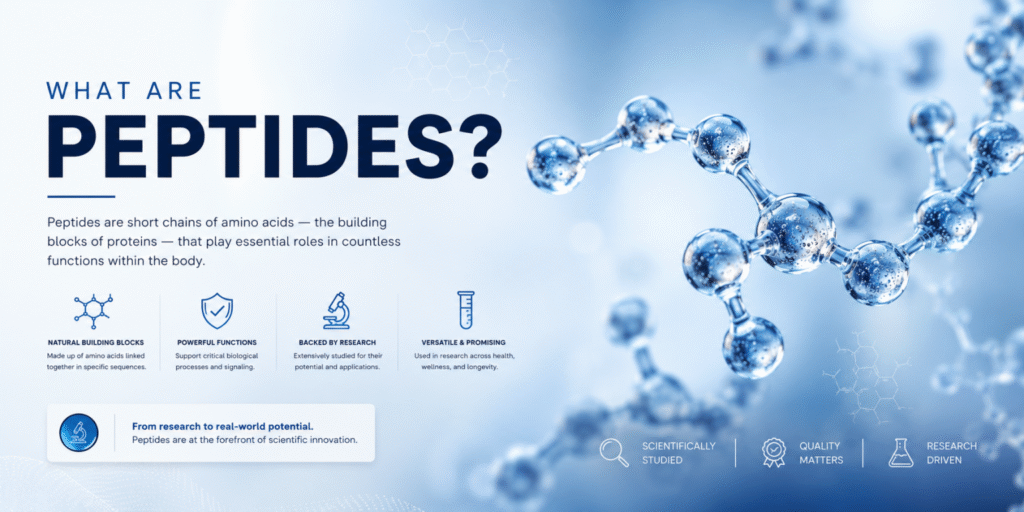
Peptides are short chains of amino acids, the same building blocks that form proteins that function as biological messenger molecules. Your body already produces hundreds of them naturally. They regulate hormones, signal cellular repair, modulate inflammation, control metabolism, support immune function, and govern virtually every major physiological process in your body.
Think of them as molecular text messages: short, precise, targeted instructions that your cells know exactly how to read.
The critical aging connection: many of our most important endogenous (made within your body) peptides decline significantly with age. Growth hormone-releasing hormone, protective gut peptides, tissue repair signals, pineal-derived bioregulators… their production slows, their signalling becomes less efficient, and the biological consequences accumulate over years. Recovery takes longer. Sleep becomes shallower. Inflammation compounds. Skin loses resilience. Body composition shifts against us. The system runs at a lower set point.
Peptide therapy works by replenishing or mimicking these declining signals, providing precise molecular instructions that the body recognizes and knows how to respond to. This is not pharmacological override. At its best, it is biological restoration.
This is why peptides have captured the attention of longevity physicians, regenerative medicine specialists, elite athletes, and increasingly, ordinary people over 40 who want to age with intention rather than resignation.
The Legal Landscape: Canada and the United States
Before I walk you through the six peptides I want you to understand, the regulatory context matters which is part of my obligation to you.
In Canada, all medication intended for human use must go through Health Canada’s approval process. Most peptides currently generating interest in the longevity space including CJC-1295/Ipamorelin, Semax, Epitalon, and GHK-Cu do not hold a Canadian Drug Identification Number (DIN). Sermorelin and BPC-157 can be prepared by compounding pharmacies by a physician’s prescription under the compounding framework. Others exist in a gray zone, available only through “research use only” vendors with no pharmaceutical oversight.
This does not mean Canadians are not using these compounds. They very much are. It means the vast majority are doing so without physician guidance, purchasing from unregulated sources, and accepting risks they may not fully appreciate.
In the United States, the 2026 reclassification is a significant development. BPC-157, GHK-Cu, Semax, and several others are expected to move from restricted Category 2 back to Category 1, restoring the ability of licensed compounding pharmacies to prepare them under physician prescription. Sermorelin has been available through U.S. compounding pharmacies for years. CJC-1295/Ipamorelin follows a similar pathway.
The phrase that matters in all of this: Physician prescription. Licensed pharmacy. Regulated access is a fundamentally different product than what arrives in an unlabeled vial from an online vendor. This is not a minor distinction. It is the difference between pharmaceutical-grade sterility and an unknown substance.
Six Peptides Worth Understanding
1. Sermorelin: Restoring the Growth Hormone Axis Physiologically
What it is: Sermorelin is a synthetic analogue of growth hormone-releasing hormone (GHRH) It is the biologically active first 29 amino acids of the native GHRH molecule. It was FDA-approved in 1997 under the brand name Geref for the diagnosis and treatment of growth hormone deficiency in children, giving it a clinical history that most peptides in this space simply do not have. It was voluntarily withdrawn from commercial sale in 2008 for business reasons, not safety concerns.
How it works: Sermorelin binds to GHRH receptors in the anterior pituitary gland and stimulates physiological, pulsatile growth hormone (GH) release, the same natural pattern the hypothalamus would produce in a younger person. This is the critical distinction from synthetic human growth hormone (hGH): exogenous HGH bypasses the body’s own regulatory system, suppresses natural pituitary function, and carries risks of supraphysiological hormone levels. Sermorelin works upstream, preserving the natural somatostatin feedback loop so that growth hormone release remains physiological and self-regulating.
What the research shows: Clinical studies have consistently demonstrated that Sermorelin effectively increases GH and IGF-1 levels in adults with age-related decline. A NIH-reviewed trial found that six months of daily bedtime Sermorelin administration increased IGF-1 levels by 35%, with measurable increases in lean body mass and decreases in body fat. Research published in the journal Sleep demonstrated that GHRH administration increases slow-wave (deep) sleep in older subjects. This is clinically significant because the majority of daily growth hormone secretion occurs during slow-wave sleep, and GH itself promotes restorative sleep architecture, creating a powerful positive feedback loop.
Clinical applications over 40: For men and women experiencing the effects of age-related GH decline, which can include increased visceral fat that resists diet and exercise, loss of lean muscle mass, fatigue, reduced recovery capacity, lighter and less restorative sleep, skin that is losing collagen and elasticity. After attending to all nutrient, biochemical and hormonal imbalances, Sermorelin is often the first growth hormone peptide worth evaluating. It is important to note that working with a physician can ensure this protocol is safe. The goal is to never increase GH without testing levels and ensuring they are low first.
It is also used in perimenopause and andropause protocols because declining sex hormones and declining GH interact: low estrogen and low testosterone both compound growth hormone deficiency symptoms. More importantly, poor sleep can decrease GH production, so it is important to start with sleep restoration first.
Timeline: Body composition changes become apparent over two to three months of consistent use. Some people report improved sleep within the first few weeks.
Important contraindications: Active malignancy or history of hormone-sensitive cancers, as IGF-1 can promote cell proliferation. Pituitary pathology must be ruled out before initiating therapy. Physician evaluation is not optional here – it is how you know whether you are a candidate.
2. CJC-1295 / Ipamorelin: The Synergistic Growth Hormone Stack
What it is: CJC-1295 and Ipamorelin are two distinct peptides that are almost always used together because they operate through complementary mechanisms to produce a growth hormone effect more potent than either compound alone. This is the most searched peptide protocol in the United States, with monthly search volumes trending from 27,000 to over 60,000 in the past 12 months.
How they work separately:
CJC-1295 is a GHRH analogue engineered with a Drug Affinity Complex (DAC) modification that dramatically extends its half-life. Where native GHRH is rapidly degraded by enzymes in the bloodstream within minutes, CJC-1295 with DAC remains active for approximately six to eight days. This means it continuously primes the pituitary, extending the duration and amplitude of each growth hormone pulse and increasing the number of somatotroph cells actively synthesizing GH. Research has documented CJC-1295 increasing growth hormone levels by 200 to 1000% above baseline, with elevated production continuing for up to six days post-injection.
Ipamorelin is a selective growth hormone secretagogue that works through an entirely different receptor – the ghrelin/GHS receptor (GHSR). Where CJC-1295 acts like a sustained primer, Ipamorelin triggers a strong, acute pulse of GH release. Critically, Ipamorelin is highly selective: unlike older growth hormone releasing peptides (GHRP-2, GHRP-6) which caused significant hunger, elevated cortisol, and raised prolactin, Ipamorelin produces GH release without meaningfully affecting cortisol, prolactin, or appetite. This selectivity makes it one of the most clinically favorable compounds in its class.
The synergistic mechanism: CJC-1295 increases the pool of available GH in the pituitary and extends pulse duration. Ipamorelin amplifies the strength of each individual pulse. Together, they produce sustained, physiological GH elevation throughout the day and particularly during night-time administration, when natural GH secretion peaks. When used in combination, the GH response is three to five times greater than either compound used alone because they act on different receptor families in the pituitary, creating comprehensive stimulation without competitive interference.
What the research shows: Two separate human trials, one in 2006, and one in 2013 demonstrated the ability of GHRH analogues in this class to increase GH and IGF-1 in healthy adults. The well-documented clinical benefits include improved body composition (lean mass up, visceral fat down), deeper and more restorative sleep, accelerated recovery from training and injury, improved skin tone and collagen production, and sustained energy improvement over eight to twelve weeks of use.
Clinical applications over 40: The CJC-1295/Ipamorelin combination is particularly appropriate for patients whose primary goals include body composition optimization, recovery enhancement, anti-aging, and sleep quality, especially where lab work confirms suboptimal IGF-1 levels. It is commonly used alongside hormone optimization protocols (testosterone, estrogen, progesterone) where the combination of sex hormone restoration and GH axis optimization produces results beyond what either intervention achieves alone.
Same contraindications as Sermorelin apply: Active malignancy, history of hormone-sensitive cancers, and pituitary pathology require evaluation and ruling out before therapy.
3. BPC-157: The Body’s Repair Signal, Amplified
What it is: BPC stands for Body Protection Compound. BPC-157 is a synthetic pentadecapeptide, 15 amino acids derived from a partial sequence of a naturally occurring protective protein found in human gastric juice. It was first isolated because of the remarkable tissue-protective properties of gastric secretions, which have evolved to protect the stomach lining from the highly corrosive environment it inhabits. Over 50 published studies have examined BPC-157’s mechanisms and effects across multiple tissue systems.
How it works: BPC-157 is a multi-pathway repair signal. Its primary mechanisms include:
- Angiogenesis: One of BPC-157’s most powerful and well-documented effects is its ability to stimulate the growth of new blood vessels into damaged tissue. This process is called angiogenesis. It matters enormously because injured tissue cannot repair itself without a fresh blood supply. No blood flow means no oxygen, no nutrients, and no healing. BPC-157 triggers the body to build new vascular pathways directly into the injury site, essentially rerouting circulation to where it is needed most. This is one of the primary reasons it accelerates healing across so many different tissue types.BPC-157 upregulates VEGF (vascular endothelial growth factor) and drives new capillary formation into injured sites.
- Collagen synthesis and fibroblast activation: BPC-157 stimulates fibroblast proliferation and collagen production, directly accelerating structural repair in connective tissue: tendons, ligaments, cartilage, and the gut lining.
- Nitric oxide modulation: BPC-157 influences nitric oxide pathways, which regulate vascular tone, blood flow, and inflammation in injured tissue. This contributes to both its healing properties and its reported analgesic effects.
- Growth hormone receptor upregulation: BPC-157 enhances GH receptor expression, meaning it improves the body’s sensitivity and response to the growth hormone it already produces, which amplifies its tissue-repairing effects.
- Anti-inflammatory cytokine modulation: BPC-157 reduces the expression of pro-inflammatory cytokines, damping the destructive phase of inflammation while preserving the regenerative signals.
- Gut-brain axis support: Because BPC-157 is derived from gastric tissue and has profound effects on intestinal integrity, it also influences the gut-brain axis with emerging research suggesting downstream effects on mood, anxiety, and neuroprotection.
What the research shows: BPC-157 has an extensive and consistent preclinical data set – one of the most robust of any peptide in this category. Healing of muscle, tendon, ligament, and bone has been demonstrated across multiple animal models. Gastric cytoprotection – healing of ulcers, GI fistulas, inflammatory bowel disease models, and anastomotic sites is among its best-documented applications. A 2025 pilot study involving intravenous BPC-157 administration in humans (published in Alternative Therapies in Health and Medicine) reported no major adverse effects. A 2024 study in patients with interstitial cystitis showed 80–100% symptom resolution with direct bladder injection.
The honest caveat: the large-scale, randomized controlled trials in humans are not yet available. The evidence base is mechanistically strong and preclinically consistent, but remains at an early stage for formal human clinical validation.
Clinical applications over 40: In functional and regenerative medicine practice, BPC-157 is used for gut healing (leaky gut, GERD, inflammatory bowel conditions), musculoskeletal injuries (tendinopathies, ligament injuries, joint inflammation), post-surgical healing, neuroprotective support, and as a foundational element in comprehensive longevity protocols where systemic inflammation and tissue integrity are concerns. For patients over 40 with chronic injuries that have not fully resolved, or with gut dysfunction that intersects with hormonal and metabolic health, BPC-157 is frequently a relevant conversation.
4. Semax: The Neuroprotective Peptide for Cognitive Longevity
What it is: Semax is a synthetic heptapeptide – seven amino acids – derived from a fragment of adrenocorticotropic hormone (ACTH). It was developed in Russia in the 1980s and has been registered as a pharmaceutical drug in Russia and Ukraine since 1994 for the treatment of ischemic stroke, transient ischemic attacks, cognitive impairment, and optic nerve disease. This gives Semax something rare in the peptide world: decades of actual clinical use in real patients, in formal medical settings, with a documented safety profile. It is administered primarily as a nasal spray, which allows for rapid transit across the blood-brain barrier.
How it works: Semax operates through three distinct mechanisms that collectively explain its cognitive and neuroprotective effects:
- BDNF and NGF upregulation: Semax’s primary mechanism is dramatic upregulation of brain-derived neurotrophic factor (BDNF) and nerve growth factor (NGF). A landmark preclinical study found that a single intranasal application of Semax produced a 1.4-fold increase in BDNF protein levels, a 1.6-fold increase in TrkB (BDNF receptor) phosphorylation, and a three-fold increase in BDNF mRNA expression in the hippocampus. BDNF is the primary signalling molecule behind synaptic plasticity – the cellular mechanism underlying memory consolidation, learning, and neuronal resilience. This simultaneous upregulation of both BDNF and NGF is uncommon among nootropic compounds and may explain the breadth of Semax’s cognitive benefits.
- Dopaminergic and serotonergic modulation: Semax enhances dopamine and serotonin synthesis in prefrontal circuits – improving drive, motivation, mood stability, and working memory. Effects on focus and mental clarity are typically felt within 15–30 minutes of intranasal administration.
- ACTH-fragment modulation of acetylcholine systems: Through its structural relationship to ACTH, Semax modulates acetylcholinergic attentional systems – improving cognitive clarity, reducing brain fog, and enhancing the signal-to-noise ratio in cognitive processing.
What the research shows: A 2025 study published in Acta Naturae tested Semax in transgenic Alzheimer’s disease mouse models and found measurable improvements in cognitive function across multiple validated behavioral tests. A separate 2025 study demonstrated that Semax reduced reactive oxygen species associated with amyloid-beta interactions – a distinct neuroprotective pathway from its BDNF effects. Russian clinical data spanning 30 years demonstrates use in stroke recovery, optic nerve pathology, and attention disorders without major adverse effects and with no identified addiction potential or withdrawal syndrome.
Clinical applications over 40: Semax is highly relevant for patients experiencing cognitive deceleration – the kind that doesn’t yet qualify as a diagnosable condition but is very real: reduced working memory, slower processing, difficulty sustaining focus, mental fatigue by mid-afternoon, and the brain fog that often accompanies hormonal decline in perimenopause and andropause. It is also used in neuroprotective longevity protocols for patients with a family history of neurodegenerative disease, and in recovery protocols following head injury or significant stress-induced cognitive burnout. The BDNF pathway is also deeply connected to mood – patients with low BDNF frequently experience anxiety and depressive symptoms alongside cognitive changes, making Semax particularly relevant for the high-achieving, chronically stressed patient over 40.
5. Epitalon: The Telomere Peptide and Cellular Aging Regulator
What it is: Epitalon (also spelled Epithalon) is a synthetic tetrapeptide – four amino acids: alanine, glutamic acid, aspartic acid, and glycine – that was developed by the St. Petersburg Institute of Bioregulation and Gerontology in Russia, where it has been studied for over 35 years. It is a synthetic analogue of Epithalamin, a naturally occurring extract of the pineal gland. Epitalon is arguably the most scientifically sophisticated anti-aging peptide in current clinical discussion, targeting not symptoms of aging but fundamental mechanisms of cellular senescence.
How it works = multiple simultaneous aging pathways:
- Telomerase activation and telomere elongation: Epitalon’s most celebrated mechanism is its ability to activate telomerase – the enzyme responsible for adding protective nucleotide sequences to the ends of chromosomes (telomeres). Telomeres shorten with every cell division, and their progressive shortening is one of the primary molecular clocks of aging. When telomeres become critically short, cells enter senescence or apoptosis. In human somatic cell cultures, Epitalon treatment induces expression of hTERT (the catalytic subunit of telomerase), increases enzymatic activity, and produces measurable telomere elongation – extending cellular lifespan beyond the Hayflick limit. A 2025 in vitro study published in Biogerontology confirmed telomere elongation in human cell lines, providing important independent Western replication of earlier Russian findings.
- Pineal gland restoration and melatonin synthesis: Epitalon restores pineal gland function – specifically, the declining melatonin secretion that occurs with age. This is distinct from taking exogenous melatonin. Epitalon targets the production pathway, restoring the body’s own endogenous melatonin synthesis. Melatonin governs circadian rhythm, sleep architecture, and has profound antioxidant and anti-inflammatory effects. Declining melatonin with age contributes directly to sleep disruption, immune dysregulation, and increased oxidative stress – all of which Epitalon addresses at the source. A human sublingual study demonstrated that Epitalon enhanced melatonin production and modulated circadian gene expression including Clock, Cry2, and Csnk1e.
- Antioxidant enzyme activation: Animal studies demonstrate that Epitalon increases activity of superoxide dismutase and glutathione peroxidase, two of the body’s most critical antioxidant enzymes, significantly bolstering cellular defense against age-related oxidative damage.
- Epigenetic regulation: Epitalon appears to function as a broader bioregulator with epigenetic effects, influencing gene expression patterns associated with aging, immune function, and cellular repair, rather than acting as a simple “telomerase on switch.”
- Immune recalibration: Russian clinical trials have demonstrated immune system modulation in aging populations, supporting the hypothesis that Epitalon contributes to the maintenance of immunological competence that declines with age.
What the research shows: Animal lifespan studies have demonstrated median and maximum lifespan extension of 12–24% in rodent models. Human clinical trials conducted in Russia have shown: improved visual function in patients with retinitis pigmentosa (with parabulbar injections), normalized melatonin production and circadian gene expression (with sublingual administration), and favorable outcomes in elderly patients with cardiovascular and metabolic disease. The clinical data is predominantly Russian-origin and the field awaits large-scale Western randomized controlled trials. But the mechanistic depth and the consistency of the preclinical findings make Epitalon one of the most scientifically compelling compounds in longevity medicine.
Clinical applications over 40: Epitalon is used in advanced longevity protocols for patients who are thinking about aging at a cellular level – those interested in biological age measurement and reduction, patients with early signs of cellular immune aging, those with significant sleep dysregulation that has not responded fully to other interventions, and patients in comprehensive anti-aging programs where targeting the telomere clock is part of the strategy. It is not a single-intervention treatment. It is a sophisticated tool within a comprehensive, physician-supervised longevity program.
6. GHK-Cu (Copper Peptide) – Forty Years of Science, One of the Most Validated Peptides Available
What it is: GHK-Cu (Glycyl-L-Histidyl-L-Lysine-Copper) is a naturally occurring tripeptide – three amino acids bound to a copper ion – that was first identified in human plasma in 1973 by researcher Loren Pickart at the University of California, San Francisco. Unlike most peptides generating excitement in longevity circles, GHK-Cu has been studied continuously for over four decades, with a research depth that is unusual for compounds in this category.
GHK-Cu is naturally present in human plasma, saliva, and urine. Plasma levels average 200 ng/ml at age 20 and decline to approximately 80 ng/ml by age 60 – a 60% reduction over the adult lifespan. This decline closely correlates with reduced tissue repair capacity, slower wound healing, decreasing skin resilience, and accumulating inflammation. The body makes this peptide for a reason. As it declines, the consequences are visible and measurable.
How it works: GHK-Cu is a pleiotropic molecule – it influences multiple, seemingly unrelated biological systems through a common thread of tissue repair signalling and gene expression modulation:
- Collagen and extracellular matrix synthesis: At concentrations as low as 1–10 nanomolar, GHK-Cu simultaneously stimulates both the synthesis and controlled breakdown of collagen and glycosaminoglycans – the two primary structural components of skin, joints, tendons, and connective tissue throughout the body. This is not mere collagen production stimulation; it is active tissue remodelling, replacing damaged collagen with new, higher-quality matrix.
- Gene expression regulation – at scale: This is perhaps GHK-Cu’s most remarkable property. Research has demonstrated that GHK-Cu regulates the expression of over 1,500 human genes – approximately 10% of the human genome relevant to aging. These include genes involved in inflammation, nervous system function, cancer suppression, and skin regeneration. This positions GHK-Cu not as a narrow-spectrum compound but as a broad biological regulator operating at the genomic level.
- Metalloproteinase and TIMP modulation: GHK-Cu modulates the activity of matrix metalloproteinases (enzymes that break down damaged tissue) and their inhibitors (TIMPs), orchestrating the balance between degradation of old tissue and synthesis of new tissue – the essential dynamic of true regeneration.
- Antioxidant and anti-inflammatory signalling: GHK-Cu reduces expression of inflammatory cytokines and neutralizes free radical activity, contributing to its wound-healing and anti-aging effects systemically.
- TGF-β1 suppression: GHK-Cu suppresses the overexpression of transforming growth factor-beta 1, which has been implicated in hereditary hair loss, fibrosis, and several aging-related tissue changes. This is one mechanism behind its hair follicle and hair shaft thickening effects.
- Early neuroprotective activity: Intranasal GHK-Cu has shown, in animal research, that it delays cognitive impairment, reduces amyloid plaque formation, and lowers inflammation in the frontal cortex and hippocampus. Human randomized controlled trials are needed to confirm these effects, but the mechanistic rationale is compelling.
What the research shows – the human trial data is real:
In a controlled trial, GHK-Cu outperformed both vitamin C and retinoic acid in collagen stimulation, with collagen increases observed in 70% of volunteers after topical application. Separate trials involving 71 women and 41 women with photoaged skin showed significant improvements in skin density, thickness, firmness, laxity reduction, and fine line depth after three months of topical application – with outcomes superior to placebo and vitamin K cream. Studies in photodamaged biopsied skin showed increased collagen content and cell proliferation. These are human subjects, controlled designs, measurable outcomes – a degree of clinical validation that most longevity peptides cannot claim.
GHK-Cu is available in Canada from compounding pharmacies for topical use in skin creams.
Clinical applications over 40: GHK-Cu is relevant in multiple forms:
- Topical – the most evidence-rich application, directly supporting skin regeneration, collagen restoration, photoaging repair, and wound healing
- Injectable – used in regenerative medicine for tissue repair, joint health, and systemic anti-aging protocols
- Intranasal – emerging application for neuroprotective and cognitive longevity purposes
For patients over 40 who are seeing their skin age faster than they would like, experiencing joint tissue degeneration, managing wounds or post-procedural healing, or building a comprehensive longevity program, GHK-Cu is one of the most evidence-supported tools available. The 40-year research history is a meaningful differentiator in a field where most compounds have far shorter track records.
The Gray Market Problem – Why Source Is Everything
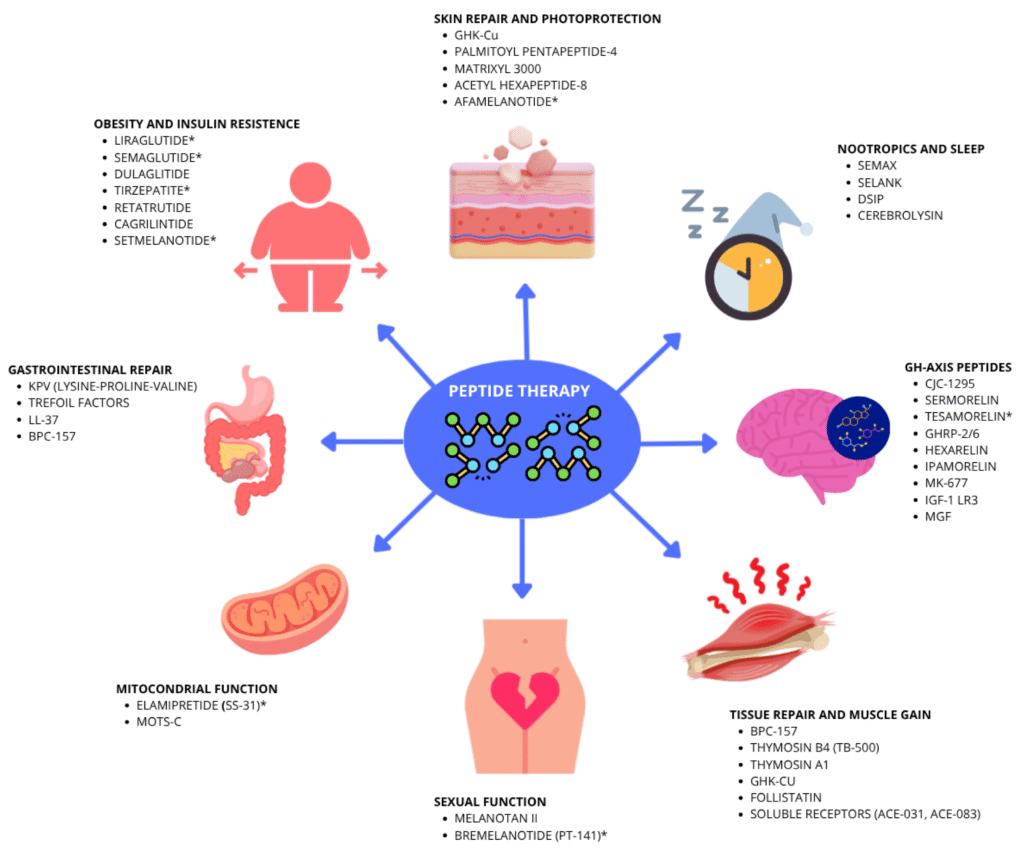
When the FDA restricted many of these peptides in 2023, demand did not decrease. Patients turned to “research use only” vendors – websites selling injectable peptides with no pharmaceutical oversight, no verified sterility, no confirmed dosing, and no accountability. A December 2025 investigation found widespread availability of these products on major retail platforms. Independent testing repeatedly uncovered incorrect dosing, bacterial contamination, mislabeling, and in some cases, vials containing no active peptide at all.
Injecting a contaminated or impure peptide is not a theoretical risk. Infections, abscesses, immune reactions, and the consequences of unknown compounds entering the bloodstream are real clinical outcomes.
Regulated compounding pharmacy production – pharmaceutical-grade synthesis, USP 797/795 sterility standards, lot-linked quality documentation, physician prescription – produces a fundamentally different product. This is not a marketing distinction. It is the clinical reality.
What Physician Oversight Actually Provides
Peptides are pharmacologically active. They interact with hormones, neurotransmitters, growth factors, and cellular signalling pathways. The effects are real – which is precisely why the oversight matters.
Before any peptide protocol begins, a physician needs to evaluate:
- Baseline labs: Hormones, inflammatory markers, IGF-1, metabolic function, organ health – the complete picture of where you are starting
- Cancer history and risk: Several peptides that act on growth pathways are contraindicated in patients with active or prior malignancies, or in those with elevated cancer risk
- Interaction with existing medications and therapies: No forum protocol accounts for your specific clinical situation
- Appropriate compound selection: Not every peptide is right for every person. The goal, the biology, the health history, and the risk profile all determine what makes sense and in what sequence
At Live Younger, we have spent 20 years working at the intersection of hormonal medicine, regenerative science, and advanced longevity. Peptide therapy – where appropriate and accessible – fits naturally into the comprehensive, whole-system approach we take with every patient. We evaluate. We educate. We guide.
If you are already using peptides and want a physician who understands this space to help you do so more safely and effectively; or if you are curious about whether peptide therapy belongs in your longevity program – that conversation starts with a consultation.
Your biology deserves more than a forum protocol and an unmarked vial.
Dr. Natasha Iyer, MD, is the founder of Live Younger in Calgary, AB, specializing in advanced longevity, bioidentical hormone replacement therapy, and sexual wellness for men and women over 40. 🌐 www.liveyounger.ca | 📞 403-237-2353